 CONTACT





 CONTACT
 SUPPORT
 Data Center Design and Installation
 UTM
UTM  VPN
VPN  INFORMATION SECURITY
  ALL
ALL 





Open Source Database Solutions
MariaDB
MariaDB Server is an open-source database server used globally across various domains. Due to its flexible architecture, MariaDB is suitable for diverse applications ranging from core banking systems to web database servers. As a fast, scalable, and robust database solution, MariaDB offers a rich ecosystem that includes multiple storage engines, plugins, and complementary tools.
Above all, MariaDB provides a broader selection of advanced storage engines. For instance, NoSQL support via Cassandra enables running SQL and NoSQL workloads within a single database system. Additionally, MariaDB supports TokuDB, which is optimized for handling Big Data in enterprise environments.
MariaDB’s Application Programming Interface (API) and underlying protocols maintain full compatibility with MySQL. Furthermore, MariaDB natively supports asynchronous operations for specific tasks. Consequently, application libraries, connectors, and adapters built for MySQL remain compatible with MariaDB, regardless of whether they leverage MariaDB's native features.
PostgreSQL
PostgreSQL offers a comprehensive feature set designed to assist developers in building applications, enable administrators to safeguard data integrity, and support fault-tolerant environments for managing datasets of any scale. In addition to being free and open-source, PostgreSQL is highly extensible. For example, it allows users to define custom data types, build user-defined functions, and write code in various programming languages without requiring database re-compilation.
MongoDB
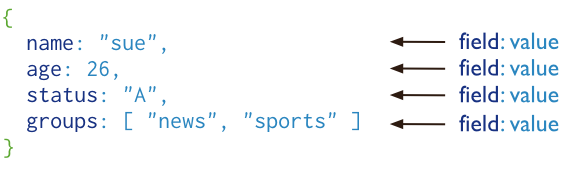
MongoDB is a document-oriented database that stores data in JSON-like documents using a dynamic schema. This architecture enables record storage without rigid structural constraints on field counts or field data types. MongoDB documents closely mirror JSON objects. Across the modern IT landscape, numerous organizations deploy MongoDB as their primary database service for applications and data storage systems. According to survey data from Siftery, over 4,000 companies—including IBM, Citrix, Twitter, T-Mobile, Zendesk, Sony, BrightRoll, Foursquare, HTC, InVision, and Intercom—utilize MongoDB as a core database engine.
MySQL
MySQL is the world's second most widely deployed open-source Relational Database Management System (RDBMS). Frequently selected for web-based projects, MySQL is also a primary database engine for open-source software requiring complete database management functionality. For commercial deployments, several paid editions are available that provide extended capabilities.
Major enterprise platforms—such as Wikipedia, alongside commercial entities like Google (for non-search processes), Facebook, and Twitter—utilize MySQL across various components of their production infrastructure. Furthermore, native integration support for Apache Hadoop enables MySQL to operate within Big Data processing workflows.
While primarily associated with web applications, categorizing MySQL strictly as a web database would be incomplete. Its ability to process terabyte-scale datasets in Big Data environments demonstrates its underlying scalability and flexibility.
MySQL does not include a default graphical database management GUI out of the box. Consequently, users frequently rely on command-line interface (CLI) tools, alongside web-based administration platforms such as phpMyAdmin or various desktop management utilities.
The official MySQL documentation highlights the following core advantages:
- Scalability and Flexibility
- High Performance
- High Availability
- Robust Transactional Support
- Optimized for Web and Data Warehousing Workloads
- Strong Data Protection Capabilities
- Comprehensive Application Development Support
- Ease of Administration
- Open-Source Flexibility with 24/7 Enterprise Support
- Low Total Cost of Ownership (TCO)